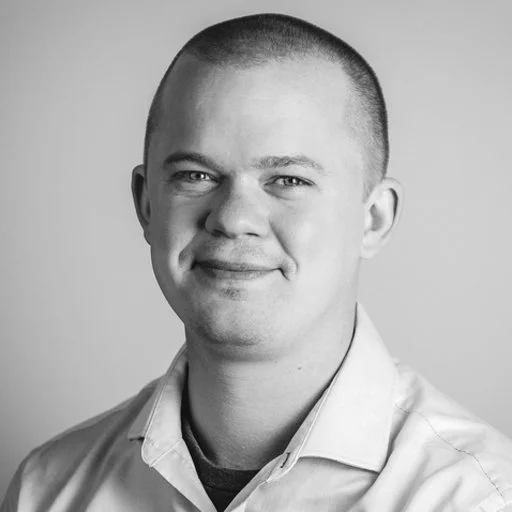
I don’t think many people grow up dreaming about becoming wireless engineers. In fact, I’d wager that most of us working in wireless today stumbled into the profession somewhere along the way.
At least, that’s what happened to me.
When I was a kid, I don’t recall spending a whole lot of time thinking about what I wanted to be when I grew up. There were certainly things that interested me. I loved music, played violin and piano, and always found composers fascinating. Maybe I wanted to be a composer? I also played soccer, although I wasn’t particularly good at it and certainly didn’t have any false hopes of becoming a professional athlete.
But while I might not have known exactly what I wanted to be, I can tell you with absolute certainty that I had no intention of becoming a wireless network professional.
So, for this first blog post, I thought I’d introduce myself, share a little about the journey that’s brought me here, and explain what I hope to accomplish by writing about it.
From Counter-Strike to Wireless Networking
My name is Kevin Berg, and I’ve spent the last 13 years working at Foundation Technologies, a managed service provider supporting customers around the country.
My introduction to technology came at a relatively young age. I remember wanting my own computer, and my parents told me I could certainly have one, provided I met two conditions: I had to pay for it myself, and I had to build it myself.
So, I did.
Next thing I knew, I was playing Counter-Strike, and I lived happily ever after.
Eventually, I got a job working retail at CompUSA. A couple of years later, I found myself at Apple Retail, where I would spend the next seven and a half years.
While working at Apple meant being surrounded by technology, perhaps more importantly, it meant being surrounded by people. Over the years, I worked in a variety of positions, from helping customers purchase their first iPhone or computer to eventually helping them mend their relationships with those products when they stopped working.
My last position at Apple was as a Genius. I don’t know what they’re calling them these days, but at the time, that meant spending my days troubleshooting computers, replacing phones, and helping people find solutions to whatever technology problems they were experiencing.
Looking back, I think the people side of that experience was probably the most valuable. The ability to navigate conversations, work with people in all sorts of circumstances, and communicate technical information in a helpful way has proven invaluable throughout my career.
Eventually, it came time to leave Apple, and I accepted a position at Foundation Technologies.
Interestingly enough, my first job at Foundation was essentially the same thing I’d just left Apple doing: repairing computers. There was, however, one pretty significant difference.
At Apple, I might repair six or eight computers on a busy day. At Foundation, I might repair three or four computers in a busy month.
As it turns out, that was a gift.
I suddenly found myself with an enormous amount of free time to learn just about anything that might prove useful in my new role.
I quickly learned that Foundation had a sister company called Atomic Data. All I really knew about Atomic Data was that they did “network stuff.”
And that sounded pretty interesting.
Until then, my experience with networking was largely limited to using it. I had internet access at home and could play Counter-Strike over wireless, but I’d never really given much thought to how networking worked beyond my own home.
As it was explained to me, networking was already a well-established discipline within the companies I worked for. Wireless networking, however, was a somewhat less developed part of the business.
Now, this wasn’t something I recognized at the time. I was still turning screws and fixing computers. I didn’t know enough about what I didn’t know to recognize that there was an opportunity to help build out the wireless practice.
Fortunately for me, somebody else did.
And that person was kind enough to take me along for the ride.
The Importance of Mentorship
I was incredibly fortunate to have someone take me under their wing and begin teaching me about wireless networking.
Remember all that free time I suddenly had? Well, we started putting it to good use.
I began getting exposure to tools like Ekahau, learning how to create predictive wireless designs and heat maps, perform wireless site surveys, develop bills of materials, and troubleshoot wireless networks.
I was also beginning to learn that wireless networking doesn’t exist in a vacuum.
It’s pretty common for something to be described as a wireless problem, only to discover after a little digging that the wireless network is working perfectly fine. Maybe the DHCP pool is exhausted, and clients simply aren’t receiving IP addresses.
That’s not really a wireless problem at all, but it’s certainly going to look like one to the person who can’t connect.
As you begin working in wireless, you inevitably find yourself learning about all the other pieces of the network that need to function properly for wireless connectivity to work in the first place. I started learning more about VLANs, routing, switching, and the various upstream configurations that make everything possible.
Of course, we don’t always get to keep working with the same people. Careers take us in different directions, and eventually I found myself largely on my own.
But I had been given a pretty good foundation.
Mind the pun.
From there, I continued learning as much as I could and taking on more responsibility for wireless projects. Before long, I was deploying wireless networks throughout Minneapolis, Saint Paul, and the surrounding areas.
Looking back, I wouldn’t be surprised if I’d deployed somewhere between 50 and 100 wireless networks during those early years.
We were busy, and those projects provided an incredible opportunity to learn through experience.
As Atomic Data began working with larger customers and pursuing larger projects, wireless networking became an increasingly important part of what we were doing. Eventually, we found ourselves working on a project to outfit a stadium with wireless connectivity.
And that’s where my next mentor came along.
I had the opportunity to work alongside someone who had built a name for himself in the wireless community worldwide. At that point, I was already pretty comfortable deploying wireless networks in enterprise environments, but I wasn’t necessarily getting into the weeds of wireless design at the level required for a large venue.
I was essentially instructed to soak up as much knowledge as I possibly could from this individual.
And that’s exactly what I tried to do.
I learned an enormous amount about designing wireless networks at scale, channelization, radio power levels and the considerations involved in deploying wireless in environments supporting thousands of people.
I was also introduced to wireless packet captures, Wireshark, and the process of trying to make sense of all the information flying across the screen.
These are all things you can read about, study, and experiment within a lab. But having the opportunity to experience them firsthand, alongside someone who understood the technology at the highest level, made an enormous difference.
Looking back, I really can’t overstate how important those mentorship opportunities were to my career.
I stumbled into wireless networking, but the people I encountered along the way helped me turn that opportunity into a profession.
Almost Every Day Is a Field Trip
So, what is it about wireless networking that has kept me interested all these years?
Well, I think we can actually tie that back to childhood.
While I might not have known what I wanted to be when I grew up, I can tell you that my favorite days in school were the days we went on field trips.
And one of the things I’ve been delighted to discover about working as a wireless professional is that almost every day can be a field trip.
Certainly, I spend plenty of time in my office. In fact, I’m sitting in my office as I write this.
But this career has taken me into just about every kind of building and environment you can imagine.
I’ve been in theaters, including the catwalks high above the stage. I’ve been underground. I’ve worked in stadiums, hospitals, multi-tenant residential facilities, and all sorts of other interesting places.
I’ve even worked in a wind tunnel, that was a particularly fun one.
That’s one of the things I enjoy most about this profession. You never really know where the next project might take you.
One day you’re working in a relatively ordinary office building. The next, you might find yourself somewhere you never imagined you’d have an opportunity to visit, trying to figure out how to make wireless work in an environment unlike anything you’ve encountered before.
There really is no end to the unique places and situations you might encounter as a wireless engineer.
And I love that no two days necessarily look the same.
From Zero Certifications to CWNE
For more than a decade, I worked on designing, deploying, managing, troubleshooting, and selling wireless networks. Everything from the smallest of small environments to some that are very large.
All of that work was built on the experience I’d gained over the years, the lessons I’d learned, and the knowledge passed along by some incredible mentors. What I hadn’t done, however, was pursue any formal wireless certifications.
There are certainly different schools of thought when it comes to certifications. I think most of us have probably encountered people with plenty of certifications who might benefit from a little more practical experience. But the opposite is also true. There are plenty of people with years of experience who have never pursued certifications to validate what they’ve learned.
I found myself firmly in that second group.
The truth is, I’ve never been particularly fond of taking tests. They’ve always given me a little anxiety. But perhaps the bigger reason I hadn’t pursued certifications was simply that nobody had required me to get them.
I was doing my job, deploying good networks, and continuing to learn through experience. There wasn’t necessarily a compelling reason to change that.
That changed when we decided to partner with Juniper Mist as part of expanding our Network as a Service offering.
I took on the responsibility of getting our participation in their managed network program off the ground, and part of the eligibility requirements involved earning several Juniper Mist certifications.
Suddenly, the scales had tipped.
I’d gone from being able to do my job without certifications to having a job that required them.
And I was nervous about it.
But I studied, took the exams, and passed.
After more than a decade of working in wireless, I finally had my first wireless certification and it felt good.
Then came the second certification. And the third.
I’d known about the Certified Wireless Network Professional (CWNP) certification program for years, but I’d always shied away from taking the CWNA exam and pursuing the certifications that followed.
After earning those first three Juniper certifications, I decided to go for it.
I studied for the CWNA, took the exam, and passed. Then came the CWDP, followed by the CWSP.
Something became pretty clear along the way: all those years of practical experience had prepared me remarkably well for the certification exams.
Certainly, there were things I needed to study and concepts I needed to revisit, but much of what I was learning reinforced things I’d already encountered in the field.
And rather than stopping there, I found myself wanting to keep going.
That brings me to where I am today.
I’m currently pursuing the Certified Wireless Network Expert (CWNE) credential.
To me, CWNE is a credential that represents trust. It means you’ve done the work, you love the work, and you want to continue doing the work at the highest level.
I’ve had the incredible fortune of working on projects at a scale that warrants CWNE-level expertise, and I believe I’ve developed much of that expertise through the experiences I’ve had.
Becoming a CWNE would mean the world to me, not simply because it’s another certification, but because it would serve as a validation of the career I’ve spent more than a decade building.
It’s a goal I’m excited to work toward.
And, as it turns out, that brings us to this blog.
So, Why Am I Writing a Blog?
As part of the process of pursuing CWNE, there are requirements beyond simply passing certification exams. One of those involves contributing written material to the wireless community.
And that’s what initially got me thinking about starting a blog.
I’ll admit, writing isn’t necessarily something I’ve spent a whole lot of time doing professionally outside of the usual reports, documentation, emails, and other things that come along with the job.
But even as I work on this very first post, I’m finding that it’s a lot more fun than I expected.
I’ve been fortunate enough to work on some fascinating projects, encounter some unusual challenges, and learn from some incredibly knowledgeable people. And I think there might be some value in sharing those experiences.
At the very least, I hope they’re interesting to read.
Maybe someone will stumble across one of these posts who didn’t even know wireless engineering was a career path that existed and they may find themselves on a similar journey.
And having spent more than a decade doing this work, it’s a profession I’d recommend to just about anyone who enjoys technology and working closely with people.
What Can You Expect From This Blog?
My goal is to publish roughly one new blog post each month. More than anything, I hope they’re fun and interesting to read.
Some posts will be technical, while others will focus on the experiences and practical realities of working as a wireless professional.
I’d like to explore everything from what’s in my wireless tool bag to the terminology and considerations involved in working on active construction sites. These are things that aren’t necessarily covered in certification materials but can be incredibly valuable in the field.
I also hope to share stories from projects I’ve worked on and some of the interesting challenges we’ve encountered. What goes into designing wireless for a typical office building versus a historically protected cathedral? Or evaluating and improving wireless connectivity across an international airport?
I suspect the list of topics will continue to grow as I encounter new projects and challenges, but that’s part of the fun.
Thanks for Reading
It’s interesting to look back at how I stumbled into wireless networking and the people and opportunities that helped shape my career along the way.
More than a decade later, I’m still learning, still enjoying the work, and pursuing a credential that would mean an enormous amount to me.
And apparently, I’m writing a blog now, too.
I don’t know exactly where this will go, but I’m looking forward to finding out.
After all, one of the best things about this career has been never knowing where the next field trip might take me.
Thanks for reading, and I hope you’ll follow along.